
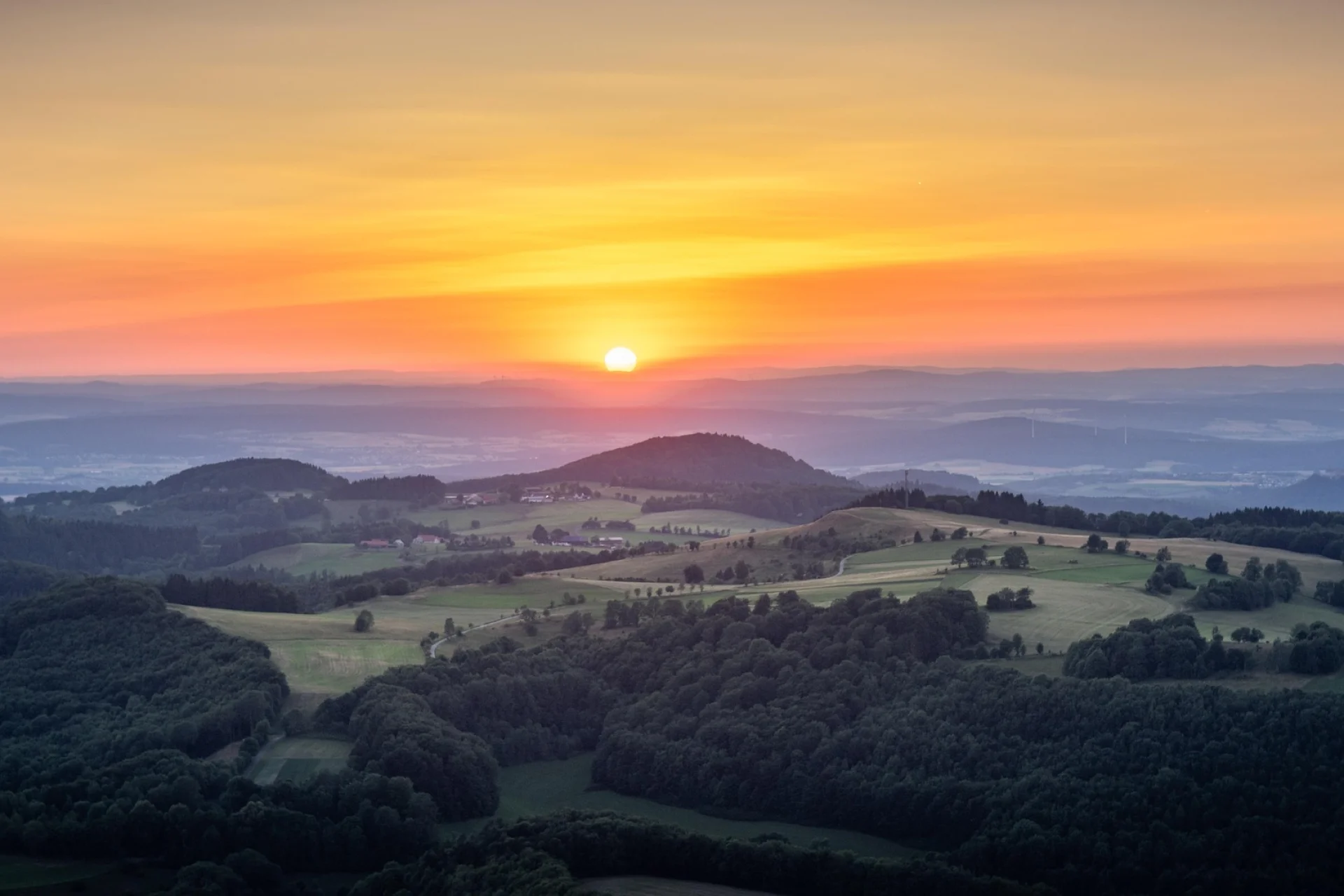
Nestled in the heart of Germany, the Thuringian Rhön is a picturesque region forming the eastern part of the larger Rhön Biosphere Reserve, a UNESCO-recognized area renowned for its unique low mountain range landscape. Often referred to as the "Land of Open Distances," this tranquil corner of Thuringia captivates visitors with its gently rolling hills, expansive plateaus, ancient forests, and a mosaic of traditional villages. It's a destination where nature takes center stage, offering a profound sense of peace and an abundance of outdoor activities.
The landscape of the Thuringian Rhön is characterized by its distinctive basalt cones and broad, treeless plateaus, known as "Kuppenrhön." These geological formations create sweeping vistas and offer unparalleled panoramic views across the countryside. Deep river valleys, such as the Werra Valley, cut through the terrain, providing fertile grounds and charming riverside paths. The region is a haven for biodiversity, with rare flora and fauna thriving in its meadows, wetlands, and mixed forests. The Hohe Rhön area, although primarily in Bavaria and Hesse, influences the Thuringian part with its higher elevations and more dramatic scenery.
The Thuringian Rhön is an ideal destination for active travelers.
The villages and towns of the Thuringian Rhön exude a timeless charm. Traditional half-timbered houses, historic churches, and local markets offer a glimpse into the region's heritage. Local cuisine emphasizes hearty, regional dishes, often featuring potatoes, various meats, and fresh produce. Small-scale agriculture and traditional crafts are still prevalent, contributing to the authentic feel of the area. Visiting a local brewery or a traditional guesthouse (Gasthof) is an excellent way to experience the local culture.
The Thuringian Rhön is well-equipped for visitors, offering a range of accommodations from cozy guesthouses and farm stays to comfortable hotels. Infrastructure for outdoor activities, including trail signage and information centers, is excellent. While public transport connects the main towns, exploring the more remote areas is best done by car or bicycle. The region's focus on sustainable tourism ensures that its natural beauty is preserved for future generations, making it an ideal choice for eco-conscious travelers seeking an authentic German countryside experience.