
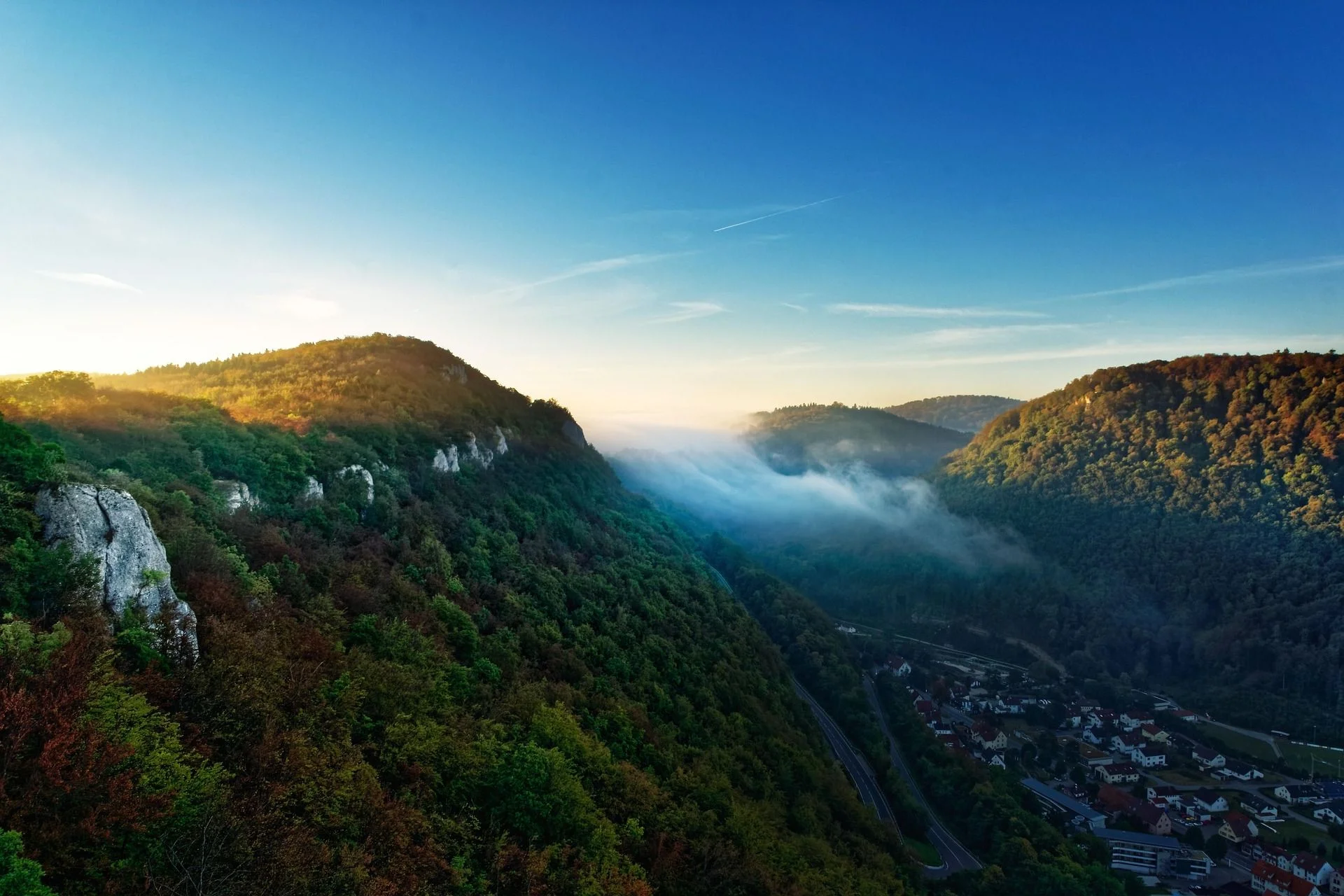
The Swabian Jura, or Schwäbische Alb, is a distinctive low mountain range and high plateau in the German state of Baden-Württemberg. Characterized by its unique geology, this region is a designated UNESCO Global Geopark, celebrated for its dramatic limestone cliffs, deep river valleys, and an extensive network of fascinating caves.
The Swabian Jura's landscape is a testament to millions of years of geological processes. The plateau is primarily composed of Jurassic limestone, which has been sculpted by water into a classic karst topography. This results in a striking scenery of dry valleys, sinkholes (dolines), and underground river systems. Lush forests cover much of the higher ground, interspersed with open meadows and agricultural land. From numerous vantage points, visitors can enjoy breathtaking panoramic views across the rolling hills and dramatic escarpments.
Beyond its natural beauty, the Swabian Jura is dotted with historical treasures, from medieval castles perched atop dramatic cliffs to charming historic towns.
While major cities like Tübingen and Reutlingen lie at the foot of the Alb, many smaller towns and villages on the plateau itself offer a glimpse into traditional Swabian life. Visitors can explore local markets, enjoy regional cuisine, and discover unique crafts. The region is also known for its traditional Swabian cuisine, featuring hearty dishes like Maultaschen (Swabian ravioli), Spätzle (egg noodles), and hearty roasts.
The Swabian Jura offers a wide array of activities, making it an attractive destination year-round.
The Swabian Jura is easily accessible by car, with well-maintained roads connecting its attractions. Public transport, primarily buses, connects major towns and some popular hiking starting points. Accommodation options range from cozy guesthouses and farm stays to modern hotels and holiday apartments, catering to various budgets. The best time to visit for outdoor activities is generally from late spring to early autumn, though the region's charm can be enjoyed in all four seasons.