
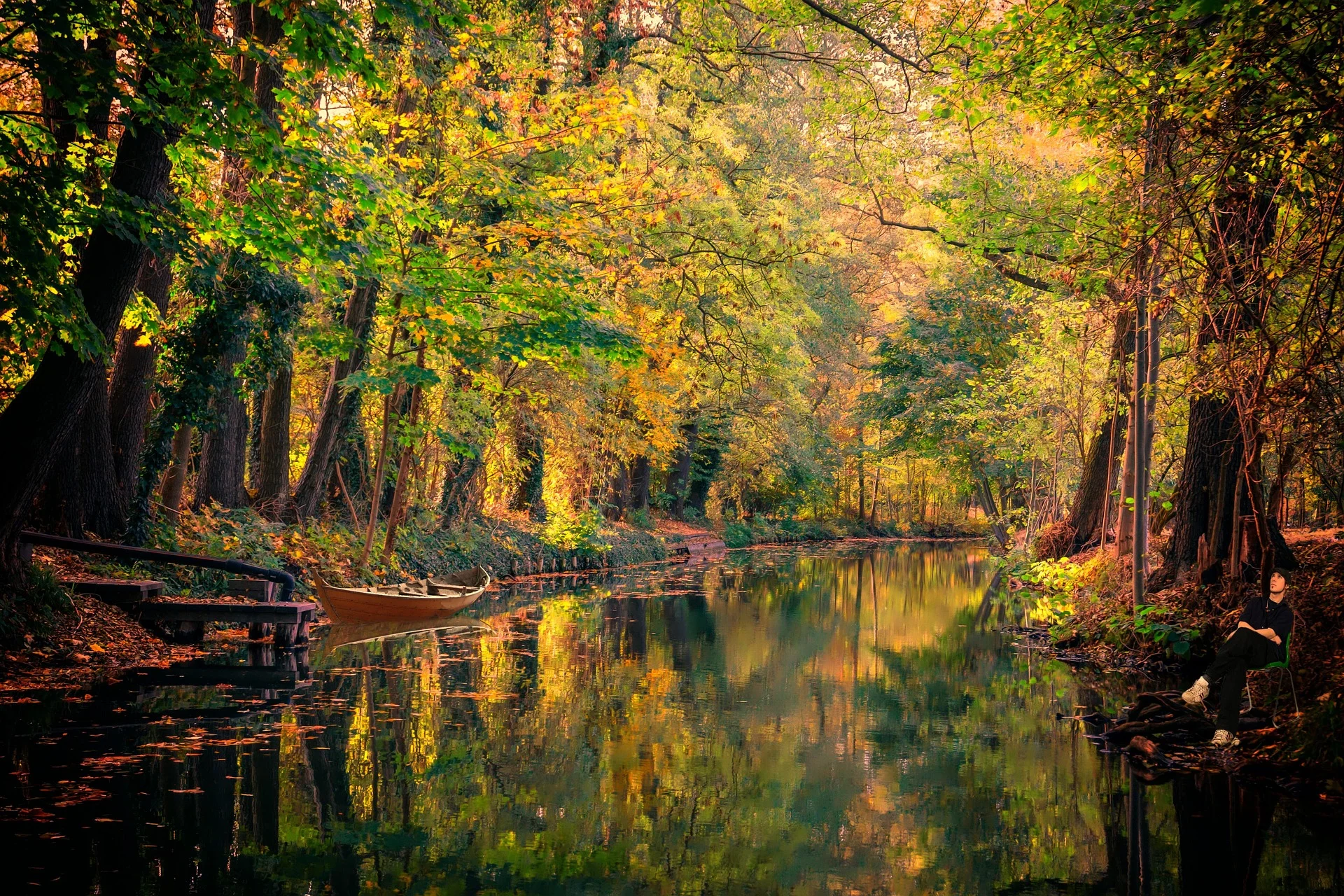
The Spreewald is a truly exceptional natural and cultural landscape in Germany's Brandenburg region. Formed by the Spree River branching into thousands of small waterways (known as "Fließe"), it creates a unique inland delta often referred to as the "Venice of Brandenburg". This intricate network of canals, surrounded by ancient alder forests, meadows, and fields, has been shaped by both nature and human activity over centuries.
The region's character is defined by its serene waterways and the vibrant Sorbian culture. The landscape is predominantly flat, making it ideal for gentle exploration. The dense, pristine forests and open meadows are home to a rich diversity of flora and fauna, offering a peaceful escape from urban life. The Spreewald was designated a UNESCO Biosphere Reserve in 1991, recognizing its ecological significance and the need to preserve its unique ecosystem and cultural heritage.
Visitors to the Spreewald are spoiled for choice with a range of activities that highlight the region's natural beauty and cultural traditions:
The Sorbian culture is a living part of the Spreewald, evident in bilingual signage, traditional festivals, and local crafts. Many villages, such as Lehde and Lübbenau, are particularly picturesque, with houses accessible only by boat in some areas. The region is highly appealing to those seeking slow travel, eco-tourism, and a blend of nature and culture.
Accommodation options range from cozy guesthouses and B&Bs to modern hotels and holiday apartments. Local cuisine features not only gherkins but also fresh fish from the rivers, traditional Sorbian dishes, and hearty German fare. The Spreewald is easily accessible from Berlin by car or train, making it a popular destination for day trips or longer stays. Its gentle terrain and numerous activities make it family-friendly and suitable for visitors of all ages looking for a tranquil and authentic German experience.