
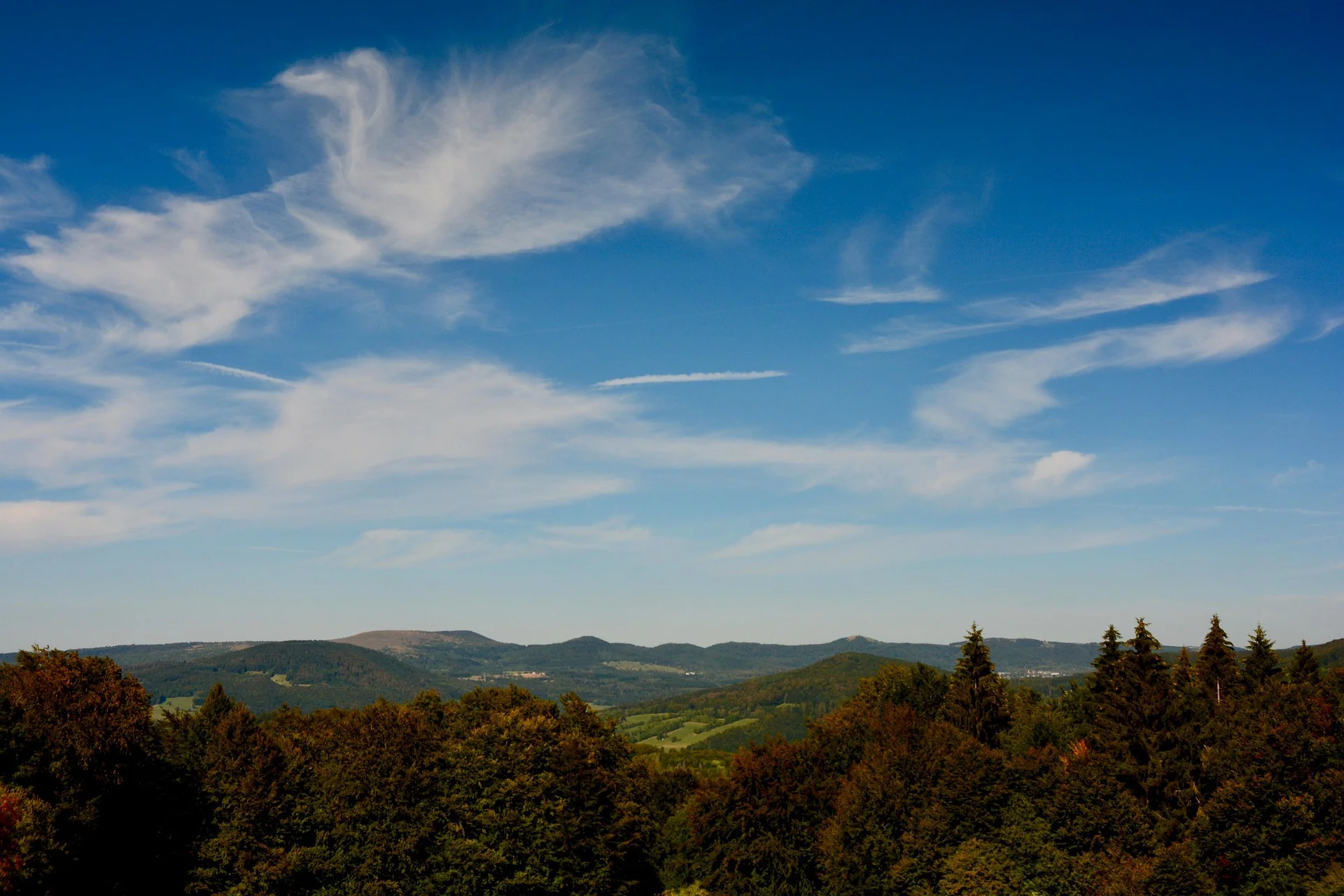
The Rhön Mountains, or "Rhön" in German, is a distinctive low mountain range in the heart of Germany, designated a UNESCO Biosphere Reserve since 1991. Often referred to as the "Land of Open Horizons" or "Land of Open Distances," it captivates visitors with its unique, gently rolling landscapes, vast treeless plateaus (known as Kuppenrhön), and a rich tapestry of forests, moors, and traditional villages.
The Rhön's character is largely defined by its volcanic past, which has shaped its distinctive dome-shaped peaks and basalt formations. Unlike many other German mountain ranges, the Rhön features extensive open grasslands and heathlands on its higher elevations, offering breathtaking panoramic views that stretch for miles. This unique blend of open spaces, dense forests, and rare biotopes like the high moors creates an exceptionally diverse natural environment.
Visitors to the Rhön Mountains will find a wealth of opportunities for outdoor adventure and relaxation:
The Rhön's culture is rooted in its rural traditions. Visitors can explore charming villages with half-timbered houses, sample local specialties like Rhön lamb and hearty regional dishes, and experience the warm hospitality of the locals. The region's commitment to sustainable tourism, as a Biosphere Reserve, ensures that its natural beauty is preserved while providing excellent visitor infrastructure.
The Rhön Mountains are an ideal destination for those seeking an active holiday amidst unspoiled nature, offering a peaceful escape from the hustle and bustle of city life and a chance to reconnect with the environment.