
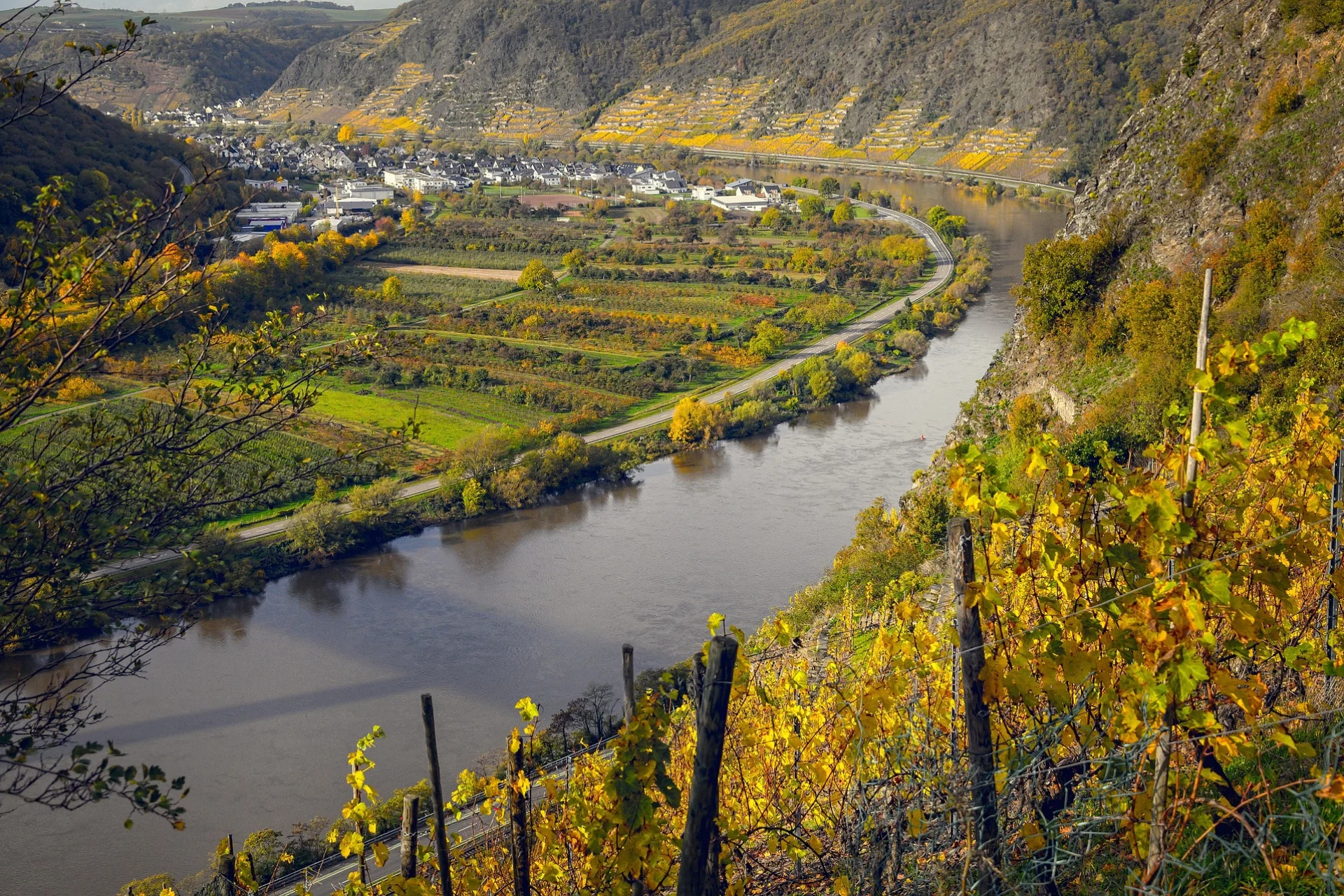
The Moselle Valley, or Moseltal in German, is one of Europe's most captivating river landscapes, stretching from the French border to its confluence with the Rhine at Koblenz. This region is a testament to the harmonious relationship between nature and human endeavor, where the Moselle River carves dramatic meanders through slate hills, creating ideal conditions for viticulture.
The Moselle's character is defined by its steep terraced vineyards, which cling precariously to the hillsides, producing some of the finest Riesling wines in the world. Dotting the landscape are charming, half-timbered villages, ancient Roman sites, and fairytale castles perched high above the river. It's a region that exudes a timeless charm, inviting visitors to slow down and savor its beauty, history, and culinary delights.
The Moselle is synonymous with Riesling wine. Visitors can explore countless wineries, participate in guided tastings, and learn about the region's unique viticultural practices. Many vineyards offer cellar tours and direct sales.
The Moselle Cycle Path (Moselradweg) is one of Germany's most popular long-distance cycling routes, offering a mostly flat and well-maintained path alongside the river. It's suitable for all ages and fitness levels, connecting charming towns and vineyards.
For those who prefer walking, the Moselsteig is a premium hiking trail stretching over 365 km, offering diverse routes through vineyards, forests, and past castles. Shorter, themed trails like the Calmont Klettersteig provide more adventurous options with incredible views.
Taking a boat trip on the Moselle is a relaxing way to appreciate the landscape from a different perspective. Various operators offer short scenic cruises and longer journeys between towns.
Beyond Cochem and Eltz, numerous other castles and ruins, such as Burg Thurant and Metternich Castle, invite exploration, each with its own story and views.
The Moselle Valley's culture is deeply intertwined with its wine. Throughout the year, but especially from spring to autumn, towns host vibrant wine festivals (Weinfeste), celebrating the harvest and local traditions. Regional cuisine features hearty German fare, often paired with local wines, and includes specialties like "Himmel und Ääd" (heaven and earth) and various potato dishes. The pace of life is generally relaxed, reflecting the rural charm of the region.
The Moselle Valley is highly accessible by car, with scenic roads following the river. Public transport, including regional trains and buses, connects many towns, and riverboats provide an additional mode of transport. Accommodation ranges from cozy guesthouses and family-run hotels to larger resorts. The region is particularly appealing for romantic getaways, family holidays, and active travelers interested in outdoor pursuits combined with cultural exploration and gastronomic delights. The best times to visit are spring for blossoms, summer for warm weather and river activities, and autumn for the grape harvest and vibrant fall foliage.