
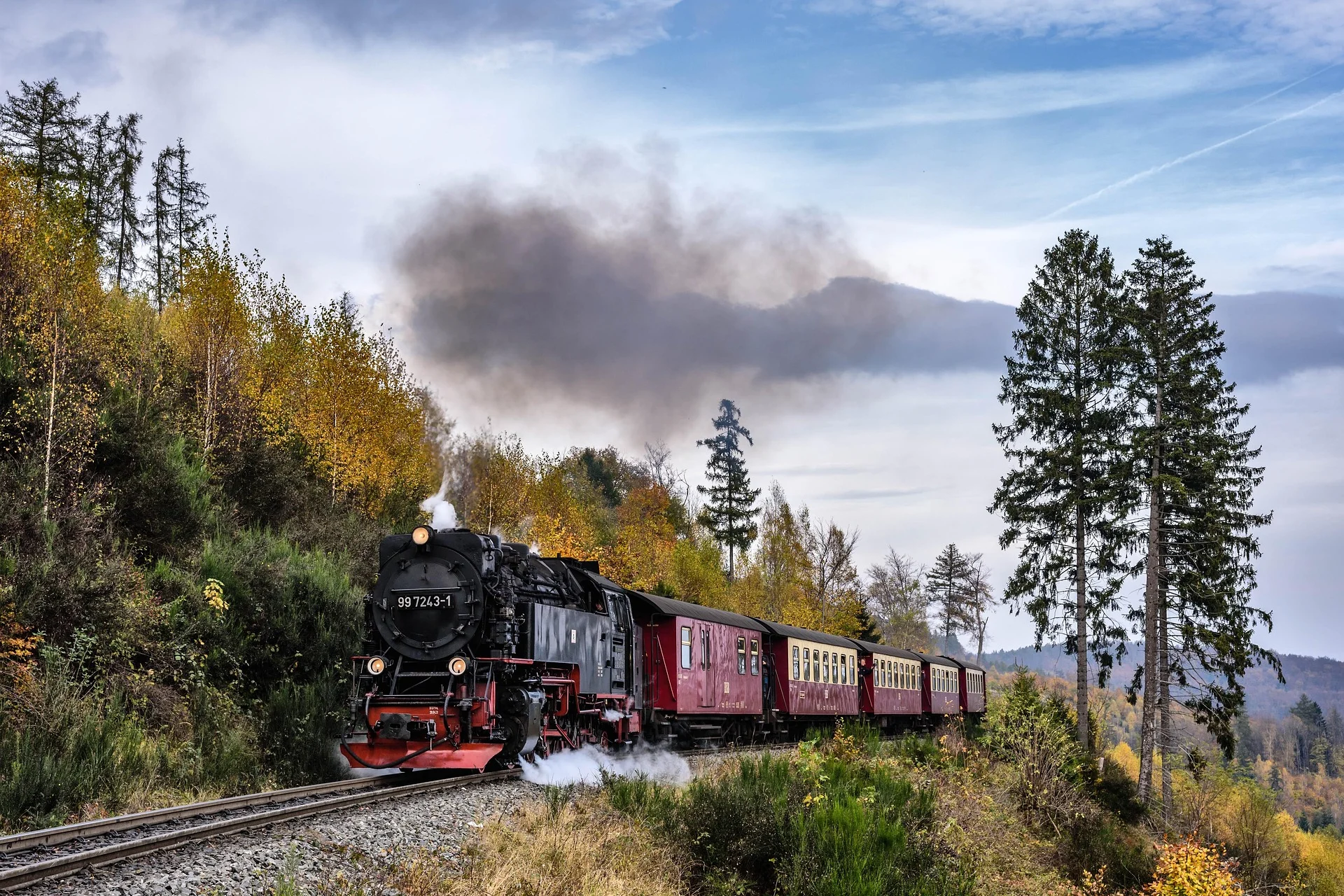
The Harz Mountains, Germany's northernmost low mountain range, is a region steeped in legend and natural splendor. Its dense forests, rugged peaks, and picturesque valleys have inspired poets and artists for centuries, and its rich history is visible in every charming town and ancient ruin.
The Harz is a paradise for outdoor enthusiasts, offering diverse landscapes that change dramatically with the seasons.
At the heart of the region lies the Harz National Park, protecting vast stretches of ancient spruce and beech forests, high moorlands, and granite rock formations. The park is home to a variety of wildlife, including red deer, wild boars, and the elusive lynx, which has been successfully reintroduced.
With over 8,000 kilometers of marked trails, the Harz is a premier hiking destination. Popular routes include the Harzer Hexenstieg (Harz Witches' Trail), a long-distance path that traverses the entire region, and numerous shorter trails leading to waterfalls, viewpoints, and historic sites. Cycling and mountain biking are also hugely popular, with dedicated trails and bike parks catering to all skill levels.
During winter, the Harz transforms into a snowy wonderland. Ski resorts like Braunlage, Wurmberg, and Torfhaus offer opportunities for downhill skiing, snowboarding, and cross-country skiing. Sledding and winter hiking are also favorite pastimes.
The Harz is dotted with beautifully preserved medieval towns, many featuring stunning half-timbered architecture and UNESCO World Heritage status.
Quedlinburg, a UNESCO World Heritage site, boasts one of the best-preserved medieval and Renaissance town centers in Europe, with over 2,000 half-timbered houses. Its collegiate church, St. Servatii, and the castle hill offer panoramic views and a glimpse into imperial history.
Another UNESCO site, Goslar, was once a free imperial city and a major mining center. The Imperial Palace (Kaiserpfalz) and the Rammelsberg Mine (also a UNESCO site) are testaments to its rich past. The town's charming old town is perfect for leisurely strolls.
Known as the "colorful town in the Harz," Wernigerode is famous for its magnificent fairytale castle perched above the town and its elaborately decorated half-timbered houses. It's also a major hub for the Harz Narrow Gauge Railway.
The Harz Mountains offer a well-developed tourist infrastructure with a wide range of accommodation, from cozy guesthouses to modern hotels. Local cuisine features hearty regional dishes, often with game, potatoes, and traditional Harz cheese. The region is easily accessible by car, and the charming towns are well-connected by local buses and the unique steam railway system, making it suitable for a variety of travel styles and interests throughout the year.