
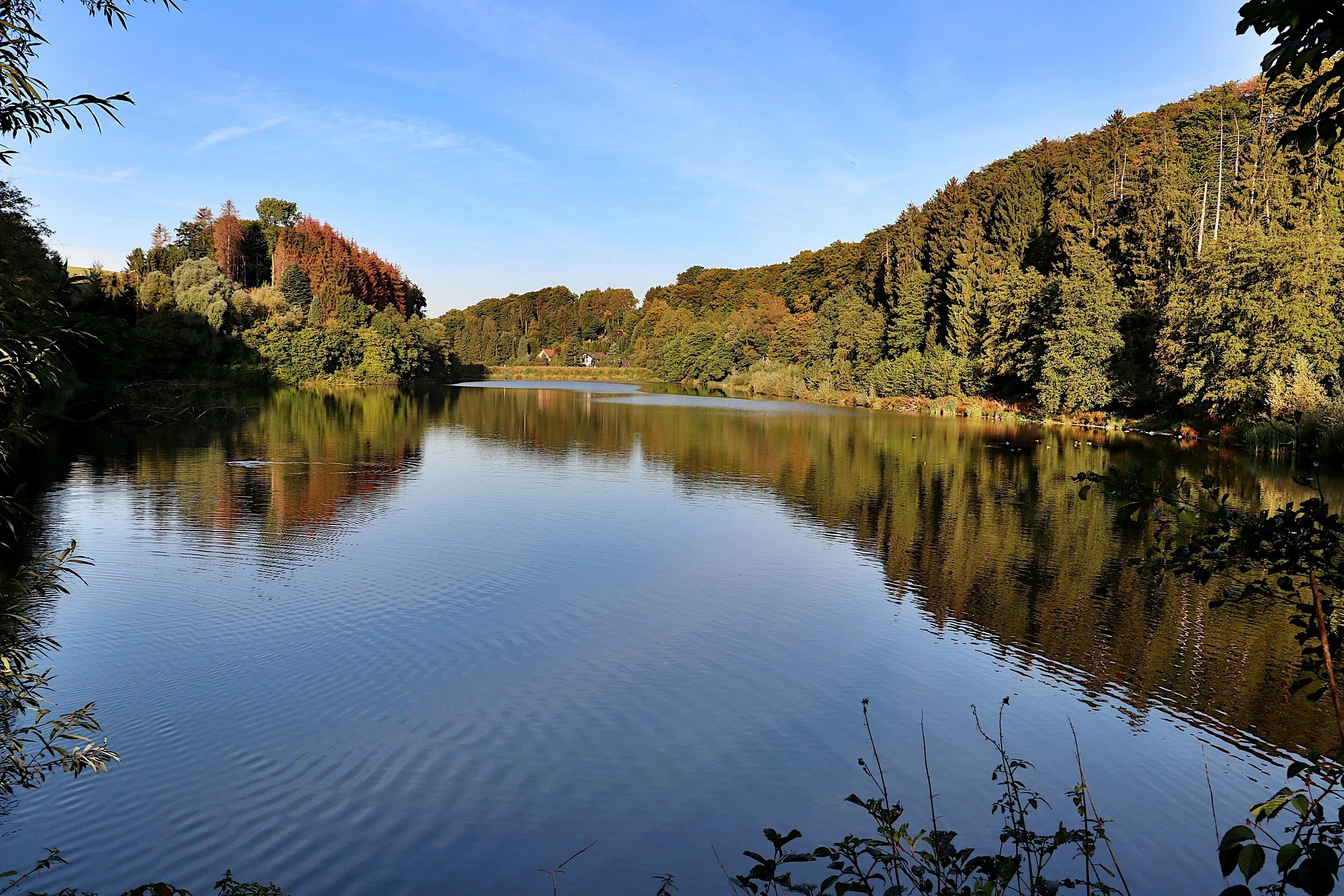
The Bergisches Land, often referred to as the "green heartland" of North Rhine-Westphalia, is a captivating region that seamlessly blends natural beauty with a rich cultural and industrial past. Its landscape is defined by gentle, forested hills, deep river valleys carved by the Wupper, Agger, and Dhünn rivers, and numerous tranquil reservoirs that serve as both drinking water sources and recreational hubs.
The region's topography is a mosaic of woodlands, meadows, and agricultural land, interspersed with charming villages and historic towns. A defining feature is the Bergisch half-timbered house, characterized by its dark slate roofs and white-washed walls, creating a distinctive architectural style that adds to the region's idyllic appeal. The numerous reservoirs, such as the Dhünn Valley Dam, Wuppertal Dam, and Bever Dam, are central to the landscape, offering serene waterscapes amidst the rolling hills.
Visitors to the Bergisches Land are spoiled for choice with a variety of attractions and activities:
Local culture is deeply rooted in its history and traditions. A culinary highlight is the Bergische Kaffeetafel, a lavish afternoon tea featuring coffee, waffles, rye bread, cold cuts, cheese, and sweet treats, often served in traditional settings. Local breweries and distilleries also produce regional specialties.
The Bergisches Land is easily accessible, particularly from the major cities of Cologne, Düsseldorf, and the Ruhr Area, making it an ideal destination for day trips or longer stays. Its well-developed infrastructure includes a range of accommodations, from cozy guesthouses to modern hotels. The region's commitment to sustainable tourism ensures a pleasant and authentic experience for all visitors seeking a blend of nature, history, and active recreation.