Museum Island Berlin, or Museumsinsel, is a unique cultural complex that stands as a testament to human creativity and historical preservation. Situated on a northern tip of an island in the Spree River, it brings together five magnificent museums, each a treasure trove of art and archaeological wonders.
Designated a UNESCO World Heritage site in 1999, Museum Island is celebrated not only for its individual collections but also for the architectural harmony of its buildings, designed by prominent Prussian architects like Karl Friedrich Schinkel and Alfred Messel. The island represents a monumental project of the 19th and early 20th centuries, aiming to create a "sanctuary for art and science."
The five institutions offer a diverse range of exhibits, from ancient civilizations to 19th-century European art.
Designed by Karl Friedrich Schinkel, the Altes Museum was the first public museum in Prussia, opened in 1830. Its classical façade houses the Collection of Classical Antiquities, featuring Greek, Etruscan, and Roman art and sculpture, including the famous Berlin Goddess.
Reopened in 2009 after extensive reconstruction, the Neues Museum is home to the Egyptian Museum and Papyrus Collection, including the iconic bust of Nefertiti, as well as collections of prehistoric and early historical artifacts.
Resembling a Roman temple, the Alte Nationalgalerie presents an impressive collection of 19th-century painting and sculpture, encompassing Neoclassicism, Romanticism, Biedermeier, Impressionism, and early Modernism. Masterpieces by Caspar David Friedrich, Édouard Manet, and Claude Monet are among its highlights.
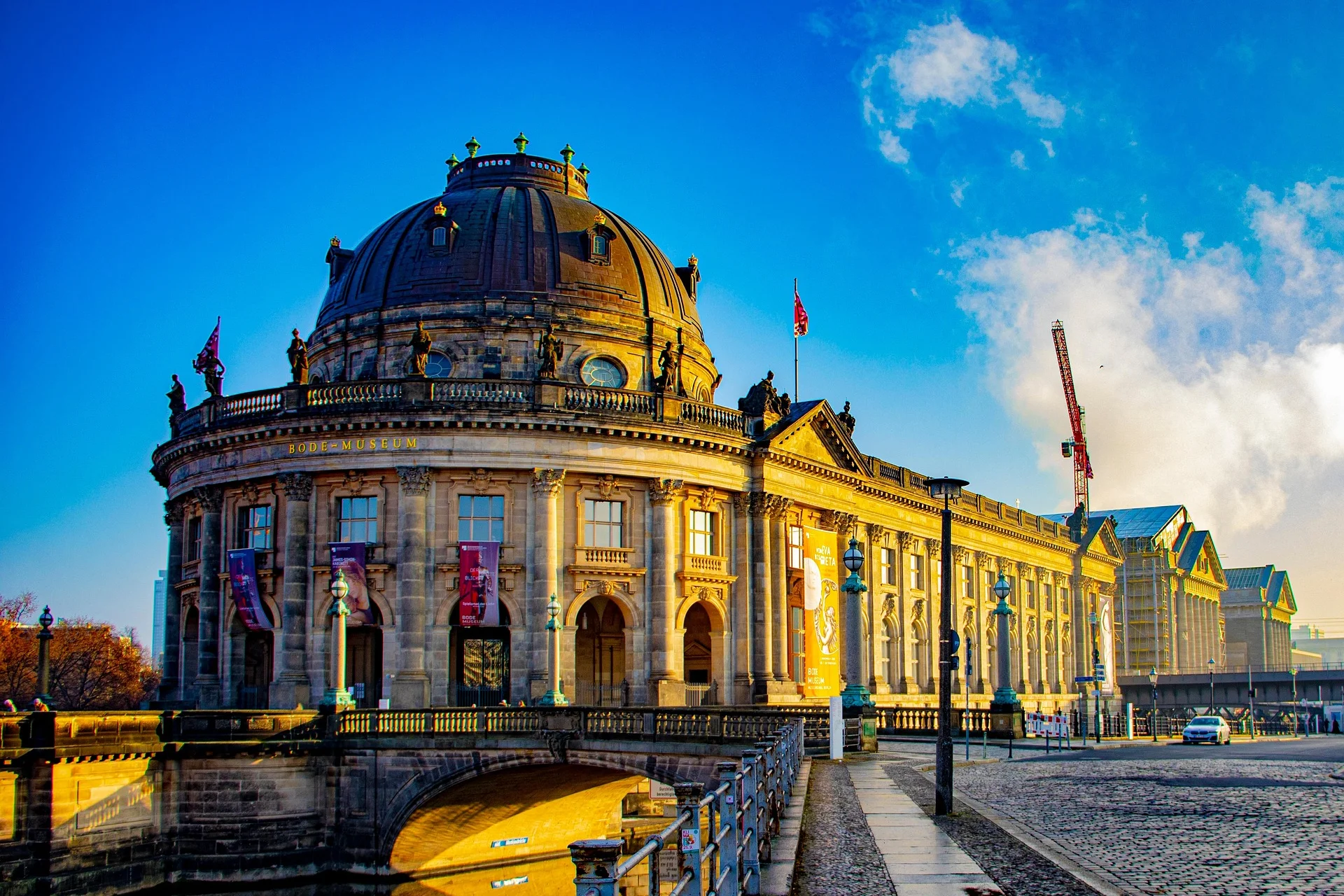
Located at the western tip of the island, the Bode-Museum is known for its extensive sculpture collection, Byzantine art, and a significant coin collection. Its grand architecture and spiral staircase are attractions in themselves.
The Pergamonmuseum is perhaps the most famous, renowned for monumental reconstructions of archaeological structures, such as the Pergamon Altar and the Ishtar Gate of Babylon. It also houses the Museum of Islamic Art. Please note that significant parts of the Pergamonmuseum, including the hall with the Pergamon Altar, are currently closed for extensive renovation work, with a projected reopening in 2027. Visitors should check the official website for current accessibility.
Beyond the individual museums, the island itself is a pleasant area for walking. The Lustgarten, a park adjacent to the Altes Museum, offers green space and views of the Berlin Cathedral. The Spree River surrounding the island also provides opportunities for boat tours, offering unique perspectives of the architectural ensemble.
Given the sheer volume of art and history, it's advisable to plan your visit in advance. Consider purchasing a Museum Island Pass for access to all participating museums over one or three days. Allow ample time for each museum, as rushing through them would diminish the experience. Audio guides are available and highly recommended for deeper insights into the collections.
Museum Island is centrally located and easily accessible by public transport, including S-Bahn, U-Bahn, tram, and bus. Many areas of the island and the museums are wheelchair accessible, though it's always good to confirm specific accessibility details with individual museums.